

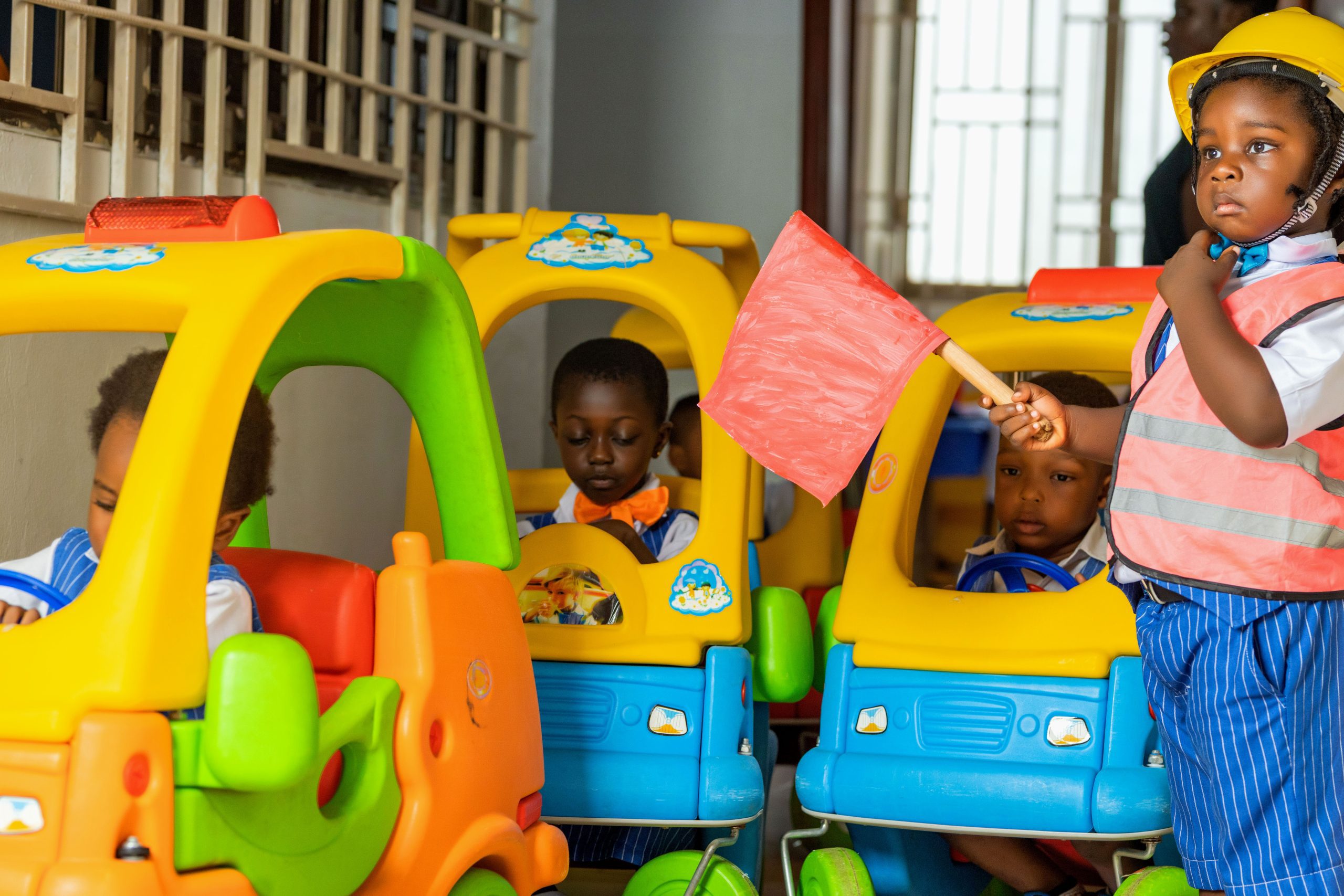
Children are born with a natural curiosity to explore, touch, climb, and imagine. What may look like “just play” is actually one of the most powerful tools for building a child’s brain. Research shows that in the first five years, a child’s brain develops more than at any other time, and play is the fuel that sparks this growth.
In Ghana, we often see children inventing games in the compound; ampe, chaskele, pilolo, or football with a plastic ball. These moments are not only fun, they are critical building blocks for memory, problem-solving, social skills, and emotional growth.
🧠 The Science of Play and the Brain
Neural Connections: Every time a child claps, sings, or runs, their brain builds new pathways. Play strengthens memory, attention, and language.
Problem-Solving: Games with rules (like ampe or ludu) train children to think logically, plan, and adapt.
Imagination: Pretend play (“I am a teacher, you are the student”) helps children develop creativity and empathy.
Stress Relief: Play lowers stress hormones, making children calmer, happier, and more ready to learn.
🎲 Types of Play that Boost Brain Growth.
1. Physical Play
Jumping, climbing, running, skipping (ampe, football, dancing):Builds motor skills, balance, and coordination.
2. Pretend & Role Play
“Cooking” with toy pots, playing shop, acting out Ananse stories: Strengthens imagination, problem-solving, and emotional awareness.
3. Creative Play
Drawing, singing, drumming, dancing, building with blocks: Develops fine motor skills and sparks innovation.
4. Social Play
Playing ludu, cards, or team sports: Builds cooperation, patience, and understanding of fairness.
5. Quiet Play
Reading picture books, solving puzzles, arranging shapes: Enhances concentration, memory, and self-control.
🌍 The Ghanaian Context: Play as Community.
In many Ghanaian communities, play is not individual but collective. Children often gather in compounds, schoolyards, and churches to play group games. This communal play teaches sharing, leadership, respect and values deeply rooted in Ghanaian culture.
Even traditional games have hidden learning:
- Ampe teaches rhythm, timing, and coordination.
- Chaskele introduces strategy and teamwork.
- Pilolo strengthens memory, speed, and observation.
- Storytelling games build language and moral lessons.
👨👩👧 Tips for Parents and Teachers
- Encourage Safe Play: Give children open spaces (yards, parks, compounds).
- Balance Structured & Free Play: Allow time for both guided activities (puzzles, Montessori games) and free exploration.
- Limit Screen Time: Replace excessive TV or tablet time with interactive play.
- Play Together: Join in! Kick the ball, clap the rhyme, or act out a story—you bond while boosting learning.
- Respect Cultural Games: Teach children traditional Ghanaian games alongside global games like puzzles.
Play is not a waste of time—it is a child’s work. Every clap, jump, and story told strengthens their brain and prepares them for future learning. In Ghana, where play is deeply woven into community life, we have a rich heritage to use as a foundation for brain development.
As the Akan say, “Anigyeɛ yɛ aduro” — “Joy is medicine.” Play brings joy, and joy grows healthy, brilliant children.